
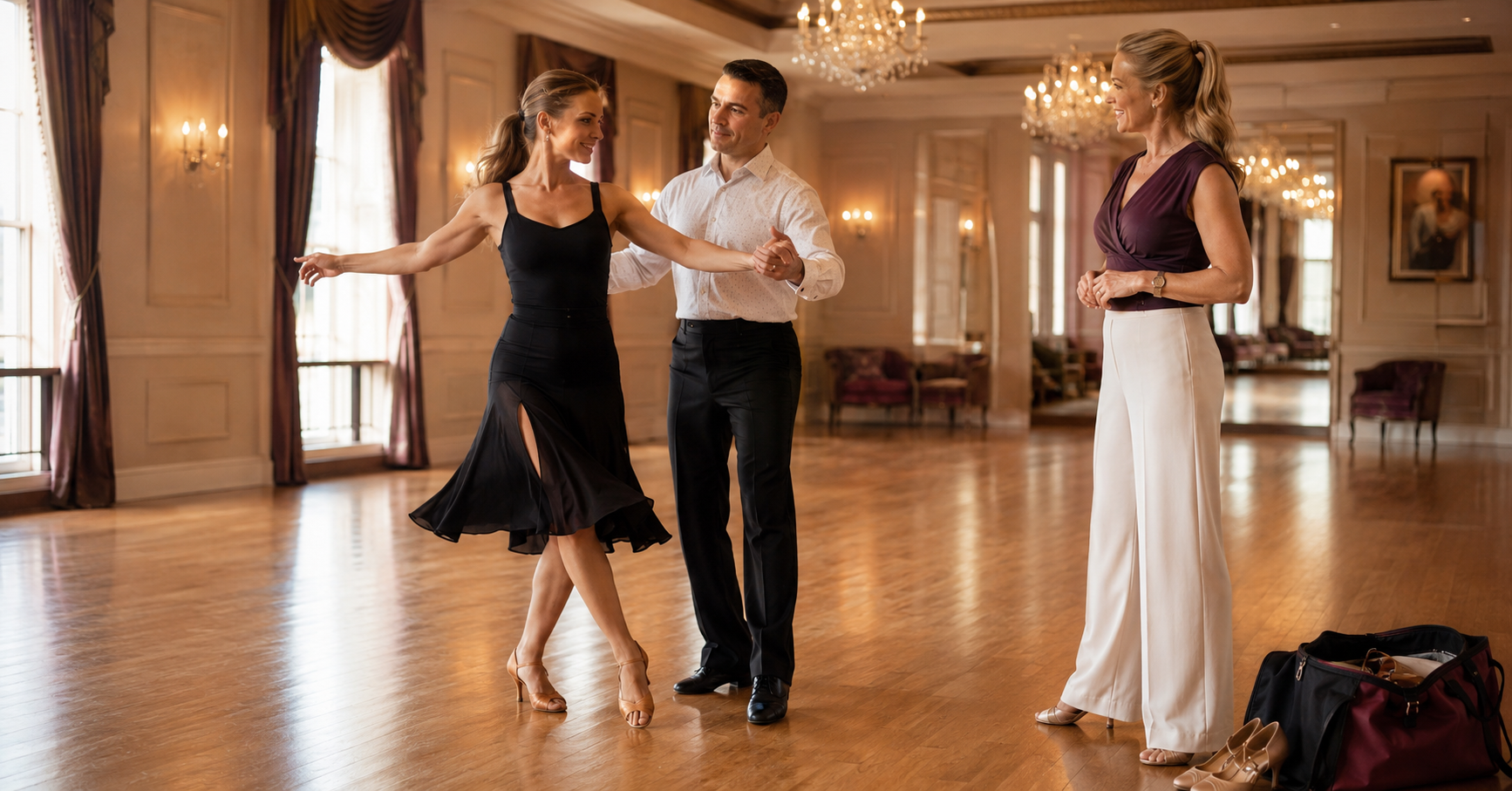
Have you ever arrived at a ballroom lesson or social dance and felt as though the floor had completely changed since the last time you were there?
One evening, your shoes may glide easily. On another, the same shoes may feel unusually sticky, slippery or unpredictable. During a humid Minnesota summer, that change may not be your imagination—and it does not necessarily mean your balance or technique suddenly became worse.
Humidity, temperature, moisture, floor maintenance and the condition of your shoes can all affect traction. Understanding those variables can help you make safer choices, protect your dance shoes and stop blaming yourself every time a turn feels different.
I teach dancers from Saint Paul, Minneapolis, Roseville, Shoreview, Plymouth and communities throughout the Twin Cities. Summer is one of the times when I especially remind students to assess the floor before assuming they should dance exactly as they did during their previous lesson.
Why Ballroom Floors Can Feel Different From One Day to the Next
Dance floors are affected by the environment around them. Temperature changes, humidity, tracked-in dirt, cleaning products, body oils and moisture can all influence how much grip a surface provides.
Stagestep, a dance-floor manufacturer, explains that both high and low humidity can affect floor traction. High humidity combined with temperature changes may allow a thin layer of moisture and residue to collect at the surface. Very dry conditions can also change friction and make some floors feel more slippery.
Wood flooring naturally absorbs and releases moisture. The Maple Flooring Manufacturers Association notes that rising humidity can cause wood to absorb moisture and expand, while dry conditions allow it to release moisture and contract.
You may not see those changes with your eyes, but you may feel them as soon as you attempt a pivot, turn or traveling step.
Sticky and Slippery Are Both Problems
Beginning dancers are often more afraid of a slippery floor, but a surface that grips too aggressively can also create problems.
Ballroom dancing includes turns, pivots and rotational movements. Your foot needs enough traction to support you, but it also needs enough freedom to rotate without forcing the knee or ankle to absorb all of the twist.
Dance Central’s ballroom shoe guidance explains that shoes that are too sticky may place strain on the knees and ankles, while shoes that are too slippery can make balance difficult during quick turns.
The goal is not maximum grip. The goal is controlled movement.
Why Suede-Soled Ballroom Shoes Help
Traditional ballroom shoes often use suede or chrome-leather soles because they provide a useful balance between glide and traction on a clean indoor floor.
Unlike many rubber-soled street shoes, suede allows the foot to turn more naturally. Unlike a very slick hard sole, it still provides enough friction to help a dancer stop and change direction.
That balance depends on the condition of the suede. When the nap becomes flattened, dirty, oily or damp, the shoe may no longer respond the way it did when it was new.
You can see Amy’s current beginner lessons in the free Ballroom by Amy lesson section, but remember that the shoes and floor shown in a video may feel different from the surface beneath you at home or at a social event.
Never Wear Suede Dance Shoes Outside
One of the easiest ways to damage ballroom shoes is to wear them from the car into the building.
Even a short walk across a sidewalk or parking lot can expose suede soles to water, oil, gravel, salt, dirt and uneven pavement. Those materials can change the sole’s texture and make its grip less consistent.
Ballroom Connection’s shoe-care guidance recommends keeping suede-soled ballroom shoes indoors and avoiding outdoor surfaces, including pavement, grass, dirt and gravel. It also warns that moisture can alter the suede’s texture.
Carry your shoes in a shoe bag and change into them after you enter the building. That one habit can extend the life of the shoes and help them perform more consistently.
Check the Floor Before Dancing Full Size
Before beginning a lesson, social dance or wedding routine, take a few small steps and assess the surface.
- Walk normally across the area.
- Try a controlled weight change.
- Test a small side step.
- Attempt a gentle quarter turn rather than a full rotation.
- Notice whether one section feels different from another.
A floor near an entrance, refreshment table or air-conditioning vent may feel different from the center of the room. Outdoor moisture can also be tracked into the building during summer storms.
Testing the floor is not nervous behavior. Experienced dancers do it because surfaces vary.
Make Your Steps Smaller When Traction Is Uncertain
If the floor feels unfamiliar, do not immediately attempt your largest movements or fastest turns.
Start with smaller steps and maintain your balance over the standing foot. Reduce the amount of rotation until you understand how the shoes and floor are interacting.
This is especially important during dances such as:
- Hustle
- Single-time swing
- Waltz
- Foxtrot
- Viennese waltz
- American-style rumba with rotating figures
Smaller movement does not make the dancing less legitimate. It allows you to remain balanced, musical and connected to your partner while adapting to the room.
You can practice several beginner-friendly dance patterns through the Ballroom by Amy free lessons, including Hustle, American-style rumba and single-time swing.
Should You Brush Your Suede Soles?
A ballroom shoe brush can help lift the flattened nap of a suede sole and remove some accumulated debris. However, more brushing is not always better.
Brush gently and follow the shoe manufacturer’s recommendations. Aggressive brushing can wear the sole prematurely, and brushing will not correct damage caused by oil, water or unsuitable surfaces.
It is also important to consider the floor itself. A shoe that feels slippery on one surface may feel perfectly appropriate on another. Before modifying your shoes, ask whether the issue is happening everywhere or only in one room.
Do Not Use Water, Soda or Rosin as a Quick Fix
Dancers sometimes use water, soda, wax, rosin or other substances in an attempt to create more grip. These shortcuts may contaminate the floor, damage the surface or create an inconsistent sticky patch that affects everyone dancing after you.
Stagestep specifically advises against using rosin on wood or Marley dance flooring because residue can build up and become difficult to remove. The company also warns against inappropriate cleaning products that may damage the floor or alter traction.
Never apply a substance to a studio or venue floor without permission from the owner or manager.
Street Shoes Can Be Too Grippy for Turns
Some beginners arrive in athletic shoes because they feel stable and comfortable. For walking, they may be. For ballroom turns, they may create too much resistance.
A rubber sole can catch the floor while the body continues to rotate. That can make the movement feel awkward and place unnecessary twisting force through the leg.
You do not necessarily need expensive professional ballroom shoes for your first lesson. A secure indoor-only shoe with a smooth, non-sticky sole may be appropriate while you are deciding whether to invest in dance shoes.
For personalized guidance, visit Ballroom by Amy’s lesson and contact section and tell me what type of dancing you want to learn. I can help you think through practical footwear before your first lesson.
Outdoor Wedding Dancing Requires a Different Plan
Summer wedding couples should ask where their first dance will actually take place.
Grass, gravel, stone patios, rugs and temporary floors do not behave like a ballroom studio floor. Formal shoes and narrow heels may sink into soft ground, catch on uneven surfaces or become unstable during turns.
The First Dance’s outdoor-wedding guidance recommends using a proper dance surface for most outdoor weddings because grass, gravel and uneven ground can make dancing difficult, especially for people in formal shoes.
The Knot also recommends accounting for flooring and weather when planning an outdoor reception and notes that temporary flooring can help avoid uneven terrain and muddy shoes.
If your wedding dance will happen outdoors, tell your instructor early. Your routine can be designed with:
- Fewer rapid turns
- Smaller traveling movements
- More stable foot placement
- A shorter entrance
- Alternative shoes for the reception
- A backup plan for rain or soft ground
A dance that works beautifully on a polished studio floor may need thoughtful adjustments for a lawn, deck or temporary platform.
Summer Heat Can Affect the Dancer, Too
Sometimes the floor is not the only reason movement feels different. Heat, dehydration and fatigue can affect balance, concentration and stamina.
The Centers for Disease Control and Prevention recommends staying cool, drinking fluids and recognizing signs of overheating such as dizziness, weakness, nausea, headache, heavy sweating and muscle cramps.
Bring water to summer lessons and social dances. Take breaks when needed, especially at outdoor events or in rooms that feel unusually warm.
If you feel dizzy, faint, confused or physically unwell, stop dancing. Persistent or severe symptoms should be evaluated by an appropriate healthcare professional.
Do Not Assume Every Traction Problem Is Your Technique
Technique matters, but the environment matters too.
If a turn suddenly feels uncomfortable, consider:
- Has the weather changed?
- Is the floor damp or unusually dry?
- Are your shoes dirty or worn?
- Did you walk outdoors in your dance shoes?
- Are you using a different room or floor?
- Are you tired, overheated or dehydrated?
Once those factors are considered, an instructor can help determine whether your posture, weight placement or turning action also needs adjustment.
Private lessons make it easier to slow down and identify the real cause of a problem. Visit Ballroom by Amy to request lesson information, or call or text me at 612-308-7708.
The Best Dancers Adapt to the Floor They Have
Ballroom dancing is not about forcing the same movement onto every surface. It is about making intelligent adjustments while preserving balance, rhythm and connection.
On a humid summer evening, that may mean smaller turns, cleaner shoes and a few minutes spent assessing the floor. At an outdoor wedding, it may mean simplifying the routine or changing footwear. During a private lesson, it may mean learning how to maintain balance without relying on the floor to stop you.
The more adaptable you become, the more confident you will feel in unfamiliar studios, social dances, wedding venues and competition ballrooms.
To receive future lesson opportunities and ballroom tips, join the Ballroom by Amy newsletter.
About Amy Hanson and Ballroom by Amy
Amy Hanson is the three-time defending Dancers Cup Tour Top Teacher. She has danced professionally and internationally and built friendships with dancers many people recognize from Dancing with the Stars.
Think you are not coordinated, confident or good enough to dance? You are exactly the kind of beginner Amy loves to teach. No experience or partner is required.
Learn more: ballroombyamy.com
Call or text: 612-308-7708
Email: Amy@BallroomByAmy.com
Sources and Further Reading
- Stagestep: How to Make a Dance Floor Less Slippery
- Maple Flooring Manufacturers Association: Daily Floor Care
- Dance Central: Ballroom Dance Shoes
- Ballroom Connection: Shoe Care and Maintenance
- The First Dance: Outdoor Wedding Dance Floors
- The Knot: Wedding Dance Floor Planning
- Centers for Disease Control and Prevention: Heat and Your Health
This article includes content supported by AI. While we strive for accuracy, please use your own judgment and double-check details as needed. Photos may include AI-generated or AI-assisted imagery and may not perfectly represent a particular person, studio, venue, surface or condition.