
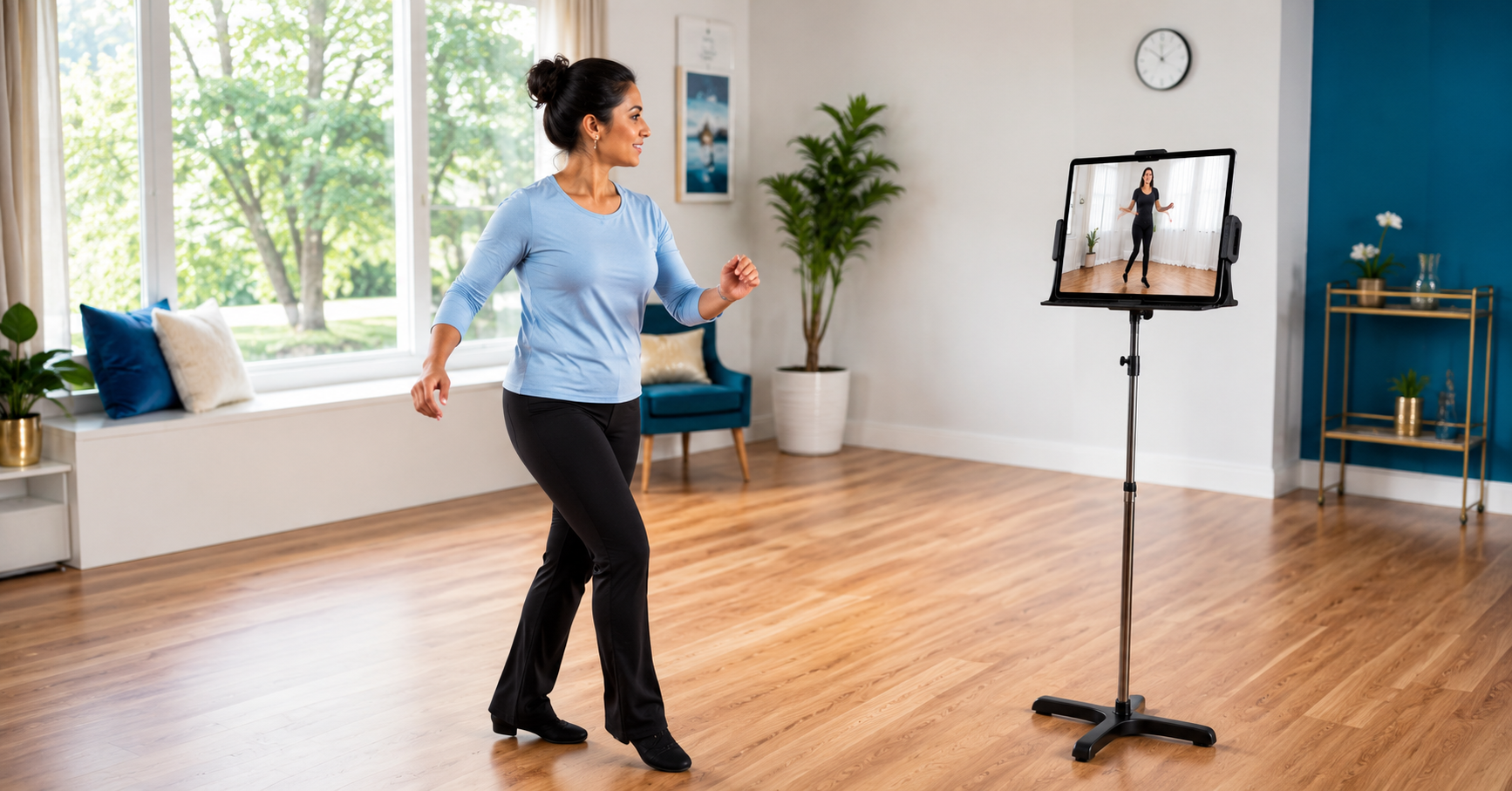
You can learn ballroom dance online well enough to understand basic rhythms, practice introductory steps and discover which dances you enjoy. Free videos can be an excellent beginning—especially when you know what to watch, how to practice and which parts of partner dancing cannot be learned completely from a screen.
Perhaps you would like to try ballroom dancing but are not ready to walk into a studio. Maybe you want to practice privately before a class, prepare for a wedding lesson or simply determine whether dancing feels comfortable and enjoyable.
Free online ballroom dance videos make all of those things possible. You can watch from home, pause whenever you need to and repeat a movement without feeling that anyone is waiting for you.
However, watching a good dancer and becoming a comfortable dancer are not quite the same process. A video can demonstrate movement, but it cannot see your balance, feel your connection with a partner or tell you why a particular step is not working.
The honest answer: Free videos can teach you a meaningful amount about ballroom dancing. They are best used as an introduction, a practice tool and a way to build familiarity—not as a test of whether you are naturally talented enough to dance.
Can You Really Learn Ballroom Dance Online?
Learning by watching is a legitimate part of developing a physical skill. Research published through the
National Library of Medicine
has examined how novice and experienced dancers visually observe and reproduce dance movement.
Experienced dancers often concentrate more efficiently on movement-relevant areas such as the shoulders, pelvis, thighs and knees. Beginners may watch the same demonstration without immediately knowing where to direct their attention.
That distinction helps explain a common online-learning experience: you may watch a step several times and still feel as though an important detail is missing. The problem may not be effort or coordination. You may simply be watching the feet while the essential information is happening in the dancer’s weight change, body position or timing.
Guidance from
Human Kinetics
describes motor learning as a process that includes observation, physical replication, feedback and repetition. Videos are strong at delivering the demonstration. They are less capable of providing personalized feedback.
What Free Ballroom Dance Videos Can Teach Well
Basic rhythm and counting
Before worrying about perfect foot placement, a beginner needs to understand when the movement happens. A helpful video lets you hear the rhythm while watching someone move with it.
Listen for the instructor’s count. Clap it, tap it or shift your weight from one foot to the other before attempting the entire pattern. When the rhythm begins to feel predictable, the steps usually become easier to organize.
Introductory foot patterns
Videos work well for small, repeatable patterns. A basic rock step, side step, box pattern or weight change can be demonstrated from several angles and repeated until the sequence feels familiar.
Beginners usually learn more from one clearly explained pattern than from a long routine containing many figures. Research into online dance tutorials supports the value of simplifying movements for people who are just getting started.
Read research on supporting novice dance learning
.
Weight changes
Ballroom steps are not merely a list of places where your shoes should land. In most cases, you must move your body weight onto the new foot before the other foot is free to move.
A useful instructor will explain where your weight should be at the end of each step. When watching, look beyond the instructor’s shoes. Notice the hips, knees and center of the body.
Dance terminology
Words such as frame, timing, closed position, rock step, lead, follow and weight transfer become less intimidating after you see them demonstrated.
You do not need to memorize a glossary before taking a lesson. Familiarity is enough. When an instructor later uses one of those terms, you will already have a visual reference for what it means.
The personality of different dances
Watching introductory lessons can help you recognize that ballroom dancing is not one single kind of movement. Swing feels different from Rumba. Hustle produces a different experience than Waltz or Tango.
Trying a few basics lets you discover whether you prefer something energetic, smooth, playful, romantic or rhythmical before choosing a class or private lesson.
Confidence to begin
For many adults, the greatest benefit of a free video is not technical. It is emotional.
Practicing at home can remove some of the uncertainty surrounding a first lesson. You discover that beginners are not expected to know everything, that the steps can be broken into manageable pieces and that an imperfect first attempt is completely normal.
How to Choose a Useful Online Ballroom Lesson
The internet contains an enormous range of dance content. Some videos are genuine lessons. Others are demonstrations, performances or condensed social-media clips that were never designed to teach a complete beginner.
A Beginner-Friendly Video Should:
✓ Clearly identify the dance and skill being taught.
✓ Explain the rhythm or count before adding complexity.
✓ Teach one manageable section at a time.
✓ Show the feet and the dancer’s overall body position.
✓ Explain which foot receives the dancer’s weight.
✓ Demonstrate slowly before using normal speed.
✓ Avoid tricks, dips or fast turns that require previous training.
Be cautious when a video promises complete mastery in a few minutes. You may be able to understand a pattern quickly, but making the movement feel natural takes repetition.
Also pay attention to whether the instructor is teaching the leader’s steps, the follower’s steps or both. In many partner dances, the two roles use different footwork or directions.
The Best Way to Practice With a Dance Video
Pressing play and attempting to imitate everything at once is rarely the easiest approach. Instead, divide the lesson into distinct stages.
View the complete demonstration without trying to dance. Listen to the count and notice the overall direction of the movement.
Clap, tap or shift your weight without using the full pattern. Make sure the rhythm feels understandable.
Practice the first few steps slowly. Finish each weight change before worrying about speed or appearance.
Do not restart the entire lesson after every mistake. Repeat the smallest troublesome piece several times.
Start with a comfortable tempo. Keep your movements smaller if the original demonstration feels too fast.
Compare your timing and weight changes with the instructor. Focus on the movement—not whether you look polished.
Practice in an uncluttered area with a stable floor and shoes that stay securely on your feet. Avoid practicing turns near furniture, loose rugs, pets or other obstacles.
Short sessions are completely worthwhile. The
Centers for Disease Control and Prevention
notes that dancing can count as physical activity and that movement can be accumulated in manageable amounts rather than completed in one long session.
A useful practice rule: Stop while you are still concentrating well. Ten thoughtful minutes usually accomplish more than thirty frustrated minutes of repeatedly forcing the same mistake.
What Free Online Ballroom Videos Cannot Fully Teach
Personalized feedback
A video cannot see that your step is too large, your weight has remained between your feet or your shoulders are turning before the rest of your body.
More importantly, a video cannot determine which correction will make the most immediate difference for you. Two beginners may appear to struggle with the same step while experiencing entirely different underlying problems.
Lead-and-follow communication
Partner dancing is a physical conversation. The leader communicates an intention through movement, timing and connection. The follower receives that information and responds while maintaining balance and contributing to the partnership.
You can understand the basic concept from a demonstration, but genuine lead-and-follow skill requires another person. It cannot be developed completely through solo imitation.
This is one reason
USA Dance
recommends lessons and beginner-friendly dancing opportunities as people build a foundation for social ballroom dancing.
Adjustments for your body
Height, balance, mobility, previous injuries and comfortable range of motion all affect how a movement should be taught.
Never force a turn, stretch, dip or joint position simply because someone in a video performs it easily. Modify the size and speed of the movement. Stop if something causes pain, dizziness or unusual discomfort.
Floorcraft and dancing around others
Practicing alone does not teach you how to adjust the size of your steps in a crowded room, avoid other couples or navigate dances that move around the floor.
Those skills develop through guided practice and real dancing. They require awareness of your partner and the people sharing the space.
Preparation for a specific goal
General videos are designed for a broad audience. They do not know whether you are preparing for a wedding, a cruise, a social dance, a competition or simply a more enjoyable date night.
Personalized instruction can remove material you do not need and concentrate on the movements, music and confidence required for your actual goal.
Try Three Free Beginner Lessons With Amy
After learning how to use online instruction effectively, you can put the advice into practice. Amy Hanson currently offers three free beginner ballroom dance lessons through
BallroomByAmy.com
.
You can try them at home, repeat the sections you need and experience three dances with noticeably different personalities.
See What a Free Online Lesson Looks Like
Start with Amy’s free beginner Hustle lesson. It begins playing silently so you can immediately see how Amy breaks a dance into approachable steps.
Like Amy’s teaching style? Two more free beginner lessons—American-style Rumba and Single-Time Swing—are available at
BallroomByAmy.com
.
The Hustle
Try a lively social dance with continuous movement and an upbeat feeling. It is a useful choice for beginners who are attracted to energetic music and want to experience a dance that feels social and playful.
American-Style Rumba
Explore a slower rhythm that gives you more time to notice your balance, timing and weight changes. Rumba can be a comfortable starting point for someone who does not want to begin with fast movement.
Single-Time Swing
Learn a simplified swing rhythm that gets you moving without beginning with overly complicated footwork. It offers an approachable introduction to the fun and energy associated with swing dancing.
Start With a Free Lesson
Choose the Hustle, American-style Rumba or Single-Time Swing and begin at your own pace. Complete beginners are welcome, and you can try the lessons without a partner.
When Is It Time for an In-Person Lesson?
You do not need to finish every free video before receiving personal instruction. Online practice and in-person lessons can support each other.
You may benefit from working directly with an instructor when:
✓ You repeatedly lose the rhythm and cannot identify why.
✓ A step continues to feel uncomfortable after you slow it down.
✓ You are unsure which foot is carrying your weight.
✓ You and your partner struggle to move together.
✓ You are preparing for a wedding, party, trip or special event.
✓ You want to learn a dance that is not covered in the free videos.
✓ You want a plan based on your goals, experience and comfort level.
One or two precise corrections can sometimes resolve a problem that has been confusing you through several practice sessions. An instructor can also help you decide which online details deserve your attention and which ones can wait.
Frequently Asked Questions About Learning Ballroom Dance Online
Can I begin without a partner?
Yes. You can practice rhythm, basic footwork, balance and weight changes by yourself. A partner becomes important when you begin working on connection, leading, following and moving as a coordinated pair.
Should I mirror the instructor?
Follow the instructor’s directions rather than automatically mirroring the screen. Some teachers face the camera and intentionally mirror your movement. Others demonstrate from their own perspective. Listen carefully for right-foot and left-foot instructions.
How long should a beginner practice?
Begin with approximately 10 to 20 focused minutes. Stop sooner when you become tired, frustrated or unable to concentrate. Frequent short sessions are often easier to manage than occasional long practices.
Do I need special ballroom dance shoes?
Not for your first at-home attempt. Wear secure, comfortable shoes that allow you to move without slipping or sticking excessively. Avoid socks on a slick floor, unstable heels or shoes that easily come off.
What if I cannot follow the lesson?
That does not mean you cannot dance. Try a smaller section, reduce the speed, remove the music or choose a different introductory dance. A video that works well for one beginner may not match another person’s preferred learning style.
Let Free Videos Be Your Beginning
Free online ballroom dance lessons can teach you more than many beginners expect. You can develop rhythm, learn introductory patterns, recognize dance terminology and become comfortable with the idea of moving to music.
What videos cannot do is watch your body, respond to your questions or recreate the communication that happens between two dancers.
Use videos to become curious—not to judge yourself. Try one small pattern, repeat it patiently and celebrate the moment when something begins to feel more familiar. Then seek personalized help when you are ready to turn those first steps into confident dancing.
Want Help With Your Next Step?
Start with Amy’s free lessons, then ask about private or group instruction designed around what you want to learn. No partner or previous experience is required.
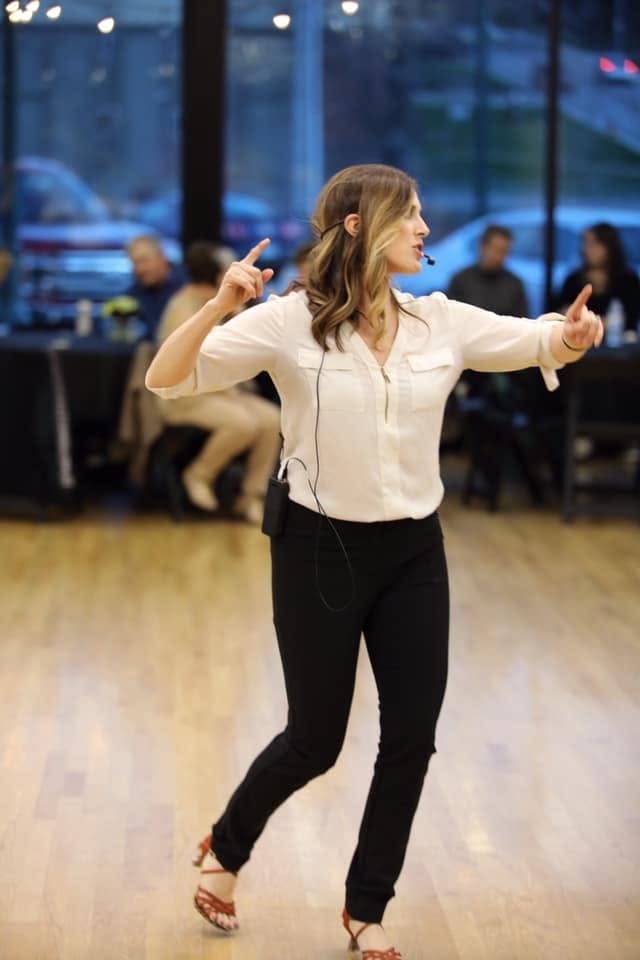
About Amy Hanson
Amy Hanson is the three-time defending Dancers Cup Tour Top Teacher. Her professional and international dance experience—and friendships with dancers from Dancing with the Stars—give her a broad perspective, while her teaching remains warm, practical and reassuring for complete beginners.
No partner or previous dance experience is required.
Website:
BallroomByAmy.com
Phone:
612-308-7708
Email:
Amy@BallroomByAmy.com
Sources and Further Reading
National Library of Medicine: Observational Learning in Dance
Human Kinetics: Motor Learning in Dance
Supporting Novice Dance Learning Through Simplified Movement
Centers for Disease Control and Prevention: Benefits of Physical Activity
USA Dance: How to Get Started Dancing
Stanford University: Introduction to Ballroom and Social Dance
Free Ballroom Lessons |
Beginner Dance Videos |
Twin Cities Dance Lessons |
Ballroom by Amy