
The first dance gets most of the planning. The father-daughter or mother-son dance often gets a song picked in five minutes and no plan at all. Then the DJ calls the parent’s name, every phone in the room goes up, and a dad who hasn’t danced since his own wedding is suddenly in the spotlight.
The fix isn’t a complicated routine. It’s choosing a dance style that fits the song and the parent, then giving it a simple shape. Here’s how to make that choice.
Quick Answer
Let the song pick the family of dances, then let the parent pick the difficulty. A song you count in threes is a waltz. A slow song in fours suits a foxtrot, a rumba or a polished slow dance. An upbeat song suits a swing. If the parent is nervous or new to dancing, choose the simplest style that fits the music, keep it to about two minutes, and add one or two moments you can rehearse, like an underarm turn or a sweet ending pose.
What Dance Style Works Best for a Parent Dance?
There’s no single right answer, but four styles cover almost every song families choose. The tempos below come from the World DanceSport Federation’s competition rules and the Rensselaer Polytechnic Institute ballroom team’s dance guide. Your song doesn’t have to match them exactly. They simply show the general feel of each dance.
The polished slow dance
A comfortable hold, a relaxed side-to-side rhythm, and two or three planned moments so it doesn’t feel like standing in place.
Best for: parents who have never danced, or anyone who wants the focus on the moment rather than the steps.
Waltz
The classic for songs in 3/4 time. Competition waltz runs 28 to 30 bars a minute, roughly 84 to 90 beats. It rises, falls and turns gracefully.
Best for: timeless, sentimental songs with a clear one-two-three.
Foxtrot or rumba
Both fit slower songs in 4/4. Foxtrot is smooth and travels with walking steps. Rumba is slower and romantic and mostly stays in one place, which helps on a small floor.
Best for: crooner standards (foxtrot) and slow ballads (rumba).
East Coast swing
Bouncy and fun, at about 136 to 144 beats a minute. A few basics and a couple of turns go a long way.
Best for: families who’d rather make guests laugh and clap than cry.
The foxtrot has been a social dance for more than a century. Britannica dates it to around 1914 and describes it as mostly walking steps with chassés and quarter turns. That walking base is why it’s so friendly to a parent who has never taken a lesson.
How Do You Tell Which Style Fits Your Song?
Play the song and count along with the strongest beat. If “one, two, three, one, two, three” feels natural, you’re in waltz territory. A waltz is in triple time, and its name comes from the German word for “to revolve”. If “one, two, three, four” fits better, the song belongs to the 4/4 family: slow dance, foxtrot, rumba or swing, depending on the speed.
Struggling to hear it? That’s common, and it usually says more about the recording than about you. Busy arrangements and soft intros can hide the pulse. Our guide to why some songs make the beat hard to find walks through simple ways to hear it.
The 30-Second Song Test
- Play the song where you’ll actually dance, not just the chorus.
- Count in threes, then in fours. Keep whichever one you can hold without drifting.
- Walk around the room in time with the beat. Comfortable walking pace? Foxtrot or slow dance. Hurried? Swing. Very slow? Rumba or a slow dance.
- Ask the parent to try it too. If they can’t walk to it comfortably, choose a simpler style or a different song.
One caution: the Viennese waltz looks gorgeous on TV, but it’s a much faster dance. Competition Viennese waltz runs 58 to 60 bars a minute, about twice as many beats per minute as a slow waltz, and it turns almost constantly. For most parents it’s the wrong first project. Our waltz vs. Viennese waltz guide explains the difference.
Should You Match the Style to the Song or the Parent?
Both, but when they disagree, the parent wins. A simple dance done with confidence looks better than an ambitious one done with a worried face. Before you settle on a style, talk through a few honest questions together:
- Has the parent danced before? A mom who swing-danced in college can handle more than a dad whose last slow dance was at prom.
- How do they feel about attention? Some parents love a showpiece. Others want to get through it without stepping on a hem.
- What will they wear? Dress shoes with slick soles, a long gown or a heavy suit jacket all change what’s comfortable. Practice in the real shoes at least once.
- Are there comfort or mobility limits? Skip big turns, dips and anything that strains a knee, back or shoulder. If a parent has health concerns, check with their doctor before adding anything physical.
- Do you want a surprise? Some families start slow, then have the DJ switch to an upbeat song. It’s fun, but it takes more rehearsal, so plan it early.
How Long Should a Father-Daughter Dance Be?
Long enough for the moment to land, and short enough that the parent isn’t running out of ideas. Many songs run longer than a nervous dancer needs, so a good rule of thumb is about two minutes. Ask your DJ or band to fade the song out on cue, or to invite other guests to join for the last part. That takes the pressure off and gives the photographer a great finish.
Timing matters too. According to The Knot, parent dances often follow the first dance when you have a DJ, while couples with a band sometimes save them for later to open another set. WeddingWire lists other common slots: near the end of dinner, after toasts or after the cake cutting. Whichever you choose, tell the parent ahead of time. Nobody dances well halfway through a bite of dinner.
Can You Combine the Father-Daughter and Mother-Son Dance?
Yes. The Knot notes that combined parent dances are an option, depending on how each family is made up. Combining them saves time and eases the spotlight for a shy parent. A few versions work especially well:
- Side by side: both pairs dance the same simple style to one song.
- The switch: each pair starts on its own, then trades partners halfway through.
- The family finish: grandparents, stepparents and siblings join for the last chorus. WeddingWire mentions both stepparents and grandparents joining in.
- Any pairing that matters: a parent dance doesn’t have to follow the traditional pattern. A mother-daughter dance, a grandparent or a favorite uncle is just as meaningful.
If a parent has passed away, some couples dance with another important person, or ask the DJ to play that parent’s favorite song while guests join them on the floor. There’s no wrong way to honor someone. Choose what feels right for your family.
What Can Dancing with the Stars Dedication Night Teach You?
This week’s Dancing with the Stars is Dedication Night, airing Tuesday, October 20, at 7 p.m. Central on ABC and Disney+, according to What’s On Disney Plus. Several celebrities are dedicating their dances to a mom or dad, Entertainment Now reports, and the announced styles include Viennese waltzes, a foxtrot and a quickstep.
If you’re watching with a parent dance in mind, look past the difficulty and notice three things:
- Style matches song. Notice how each dance’s rhythm fits its music. You can check your own song the same way with the 30-second test.
- The quiet moments carry the emotion. A held look, a pause or a simple walk often lands harder than a big trick.
- Openings and endings are planned. Your parent dance needs those two pieces more than anything in the middle.
Keep perspective, too. These couples are paired with professional dancers and rehearse every week. Your parent dance isn’t being scored. Your guests will remember that it looked happy, not how many figures you fit in.
How Much Practice Does a Parent Dance Need?
Usually less than a first dance. A parent dance doesn’t need a full routine. It needs a comfortable hold, a basic step, one or two planned moments, and a clear start and finish. A single focused private lesson can set that plan, and then you practice it together at home. Families who want custom choreography or a surprise switch will want more time.
If the parent lives out of town, plan the lesson for a visit, record the run-through on your phone, and both practice to the video until the wedding. Keep those sessions short and kind. Our tips on practicing without arguing work just as well for a parent and grown child as they do for couples.
For couples planning their wedding dances with Ballroom by Amy, the wedding dance lessons page lists a Bonus Dance Lesson add-on for $99. It’s one more private lesson, and it’s made for exactly this: a father-daughter dance, a mother-son dance or any other two-person dance that matters to your day. Amy teaches across the Twin Cities metro, and no dance experience is required for anyone on the floor.
Meet Amy at the Bridal Expo
Planning your wedding dances? Come talk them through with Amy in person at the Minnesota Bridal & Wedding Expo on Sunday, November 1, from 1:00 to 5:30 p.m. at the Saint Paul RiverCentre. Bring your song ideas and your questions about the first dance and the parent dances.
Show Exclusive: the Signature First Dance, with custom choreography to your song, is $499 at the show instead of $599.
The RiverCentre lists free passes online and $10 at the door. For the ticket link, visit the Ballroom by Amy homepage. You’ll find it right at the top of the page.
Frequently Asked Questions
Do we have to do a parent dance?
No. It’s a tradition, not a requirement. Some couples skip it, some combine it, and some replace it with a family dance. Choose what fits your family.
Can a parent who has never danced learn in time?
Yes. A polished slow dance or a simple foxtrot uses steps close to walking. With a clear plan and some practice at home, a first-time dancer can look relaxed and confident.
What if our song is too fast for a slow dance?
Lean into it with a simple swing, or ask your DJ for a slower version of the same song. Many popular songs have acoustic or piano covers.
Should a parent dance include a dip?
Only if both dancers are comfortable and you’ve practiced it safely. A gentle lean or a turn into a hug makes an equally good ending, with less risk.
|
Want your parent dance to feel easy on the day? Beginners, nervous dads and first-time dancers are all welcome. No experience needed. |
About Amy
Amy Hanson is the three-time defending Dancer’s Cup Tour Top Teacher. She has danced professionally and internationally and built friendships with dancers many people recognize from Dancing with the Stars. People who believe they’re not coordinated, confident, or good enough are exactly the beginners Amy loves to teach, and she also helps experienced dancers keep improving. Ballroom by Amy is based in the Twin Cities and welcomes dancers from across the metro. No experience or partner is required.
Sources and Further Reading
| Source | What it supports |
|---|---|
| World DanceSport Federation: Competition Rules | Competition tempos for waltz and Viennese waltz |
| RPI Ballroom Dance Team: Types of Dances | East Coast swing tempo; character of foxtrot and rumba |
| Britannica: Fox-trot | Foxtrot origins around 1914; walking steps |
| Britannica: Waltz | Triple time; origin of the name |
| The Knot: Order of Dances at a Wedding | When parent dances happen; combined parent dances |
| WeddingWire: Order of Dances at a Wedding Reception | Common timing slots; stepparents and grandparents |
| What’s On Disney Plus | Dedication Night air date, time and styles |
| Entertainment Now | Dedications to parents on Dedication Night |
| Saint Paul RiverCentre: Minnesota Bridal & Wedding Expo | Expo date, time, venue and pass pricing |
Mother-Son Dance
Parent Dance
Wedding Dance Lessons
Wedding Reception Timeline
Waltz
Foxtrot
East Coast Swing
DWTS Dedication Night
Twin Cities Wedding Dance
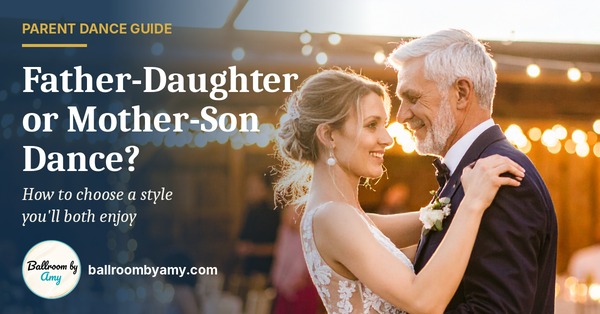
AI assisted with research support, organization and editing for this article. The featured image is an AI-generated illustration created with Adobe Express and does not show real people. This article is general information, not a substitute for in-person instruction.