Social dancing · Twin Cities
Find Your Next Night on the Dance Floor
Weekly and monthly ballroom, Latin, swing, tango, country and polka nights across the Twin Cities. Pick the dance you learned and go use it.
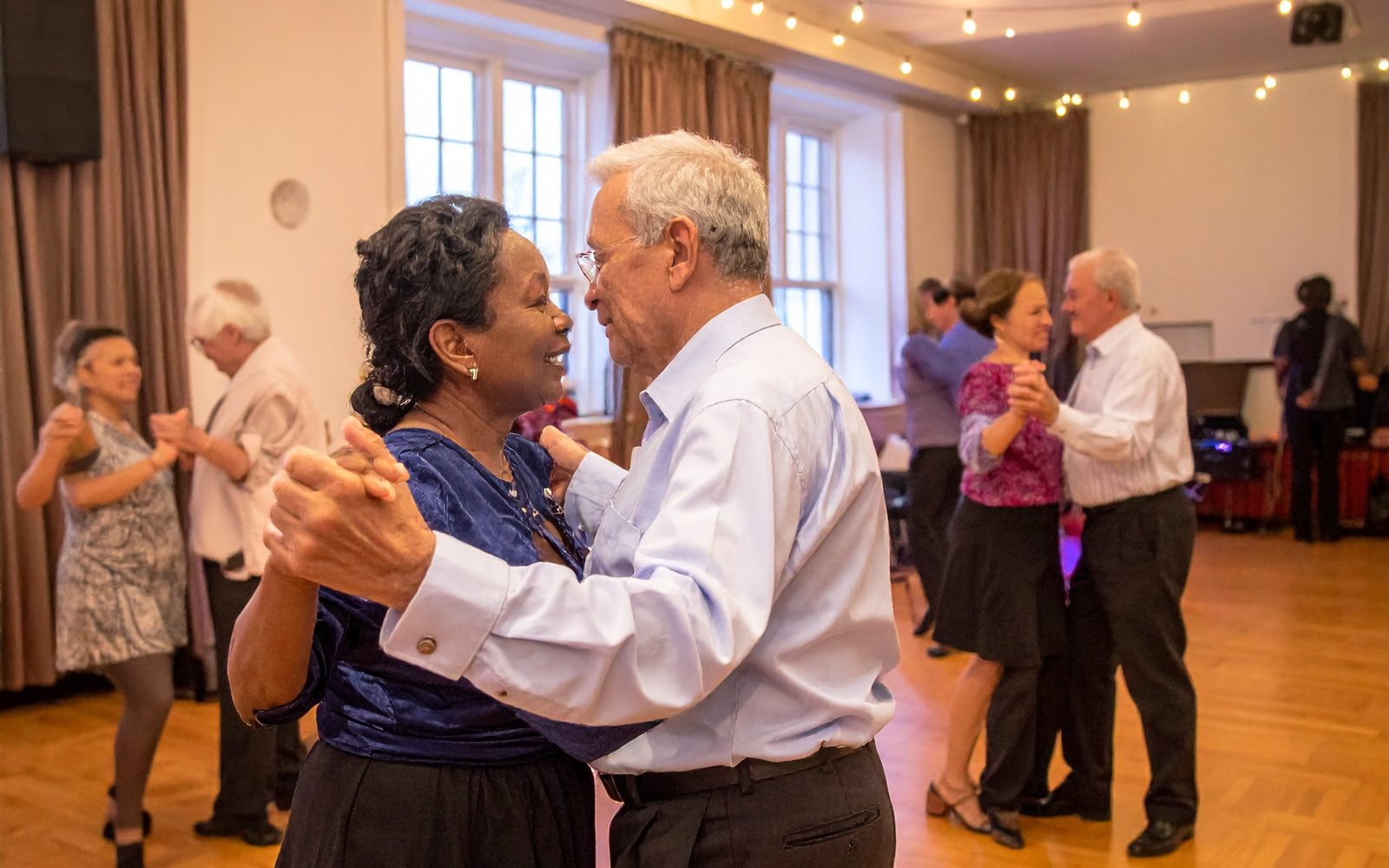
Illustration: a social dance night (fictional dancers).
Quick answer
The easiest way to practice ballroom dancing in the Twin Cities is a recurring social dance. Most start with a short group lesson, then open dancing, and several say outright that you don’t need a partner. For ballroom, start with USA Dance Minnesota (third Saturdays), Cafe Bailar (second and fourth Saturdays) or Tapestry’s Ballroom Variety Dance (first, third and fifth Sundays). The lists below cover Latin, swing, tango, country and polka, too.
Jump to a style
Which Night Fits the Dance You Learned?
Start with the dance you know best. Ballroom variety dances play a little of everything, so they are the easiest first night out if you learned several dances.
Waltz, foxtrot, ballroom tango, Viennese waltz
Cha-cha, rumba, bolero, mambo, nightclub two-step
Salsa, bachata, merengue, cumbia
East Coast Swing, Lindy Hop, West Coast Swing, blues
Argentine tango
Two-step, country waltz, line dancing
Polka, old-time waltz, schottische
Waltz, foxtrot, rumba, cha-cha and more
Ballroom & Smooth
Ballroom variety dances are where most students first use what they learned. The DJ usually changes styles every song or two, so one night can include a waltz, a foxtrot, a rumba, a cha-cha and a swing.
Competitions group these dances into four styles: American Smooth (waltz, tango, foxtrot, Viennese waltz), American Rhythm (cha-cha, rumba, East Coast Swing, bolero, mambo), International Standard (waltz, tango, Viennese waltz, foxtrot, quickstep) and International Latin (cha-cha, samba, rumba, paso doble, jive). At a social, you will hear mostly the first two.
The dances
- Waltz: the graceful three-count classic with a gentle rise and fall
- Foxtrot: smooth and traveling, made for big band standards
- Ballroom tango: sharp, staccato and dramatic, and a different dance from Argentine tango
- Viennese waltz: the fast, turning waltz
- Quickstep: a fast, light cousin of the foxtrot, seen mostly at competitions
- Cha-cha: a playful Latin rhythm built on the cha-cha-cha triple step
- Rumba: slow and romantic, and a favorite for wedding first dances
- Bolero: a slower, sweeping relative of the rumba
- Mambo: fast and punchy, with a strong Latin pulse
- Nightclub two-step: a soft, easy partner dance for slow ballads
- Hustle: the smooth, spinning partner dance from the disco era
- Samba, paso doble and jive: competition Latin dances you will see more on Dancing with the Stars than at a social
Where to dance them
St. Louis Park · 3rd Saturday of the month
USA Dance Minnesota Monthly Dance
USA Dance Minnesota (nonprofit)
- Time: Lesson 7–8 PM · Dancing 8–10:30 PM
- Dances: Ballroom and Latin variety: waltz, foxtrot, tango, cha-cha, rumba, swing and more
- Cost: $15 members · $20 non-members
- Lesson: Group lesson included
- Where: Location can change by month; check the chapter calendar
St. Louis Park · 2nd and 4th Saturdays
Cafe Bailar Saturday Dance
Cafe Bailar Dance Club (nonprofit, since 2003)
- Time: Lesson 7:30–8:30 PM · Dancing 8:30–10:45 PM
- Dances: Ballroom and Latin variety
- Cost: $15 members · $20 guests · $10 students 25 and under
- Lesson: Group lesson included
- Where: 5808 W. 36th St. (rear entrance)
Minneapolis · 1st, 3rd and 5th Sundays
Ballroom Variety Dance
Tapestry Folkdance Center (nonprofit)
- Time: Lesson 6–7 PM · Dancing 7–9:30 PM
- Dances: A different featured style each month, from waltz and foxtrot to rumba, tango and swing
- Cost: $15 ($20 live-band nights) · member, age 18–30 and youth discounts
- Lesson: Progressive monthly lesson
- Where: 3748 Minnehaha Ave.
Minneapolis · 3rd Sunday
Mostly Waltz
Tapestry Folkdance Center (nonprofit)
- Time: 2:30–5 PM
- Dances: Waltz, plus other smooth partner dances
- Cost: $12 ($15 live music) · member and youth discounts
- Lesson: Friendly instruction during the dance
- Where: 3748 Minnehaha Ave.
St. Louis Park · Every Thursday
Thursday Afternoon Ballroom Dance
St. Louis Park Community Education, Senior Program
- Time: 1–3:30 PM
- Dances: Ballroom and old-time dancing
- Cost: $6 senior program members · $9 others
- Lesson: Open dancing; partners not required
- Where: Lenox Community Center, 6715 Minnetonka Blvd.
Salsa, bachata, merengue, cumbia
Latin & Salsa
Latin nights lean toward salsa and bachata, often to live bands, and they run late. Many start at 9 or 10 PM. If you learned cha-cha or rumba in a ballroom class, salsa will feel familiar: the timing is close, but the feel is looser and more social.
The dances
- Salsa: quick and lively, danced on 1 or on 2 depending on the crowd
- Bachata: a smooth four-count dance from the Dominican Republic with a small hip lift
- Merengue: the easiest Latin dance to start with: a steady march with turns
- Cumbia: a relaxed, rolling Colombian rhythm
- Cha-cha: you will hear it at salsa nights, too
Nervous about your first salsa night?
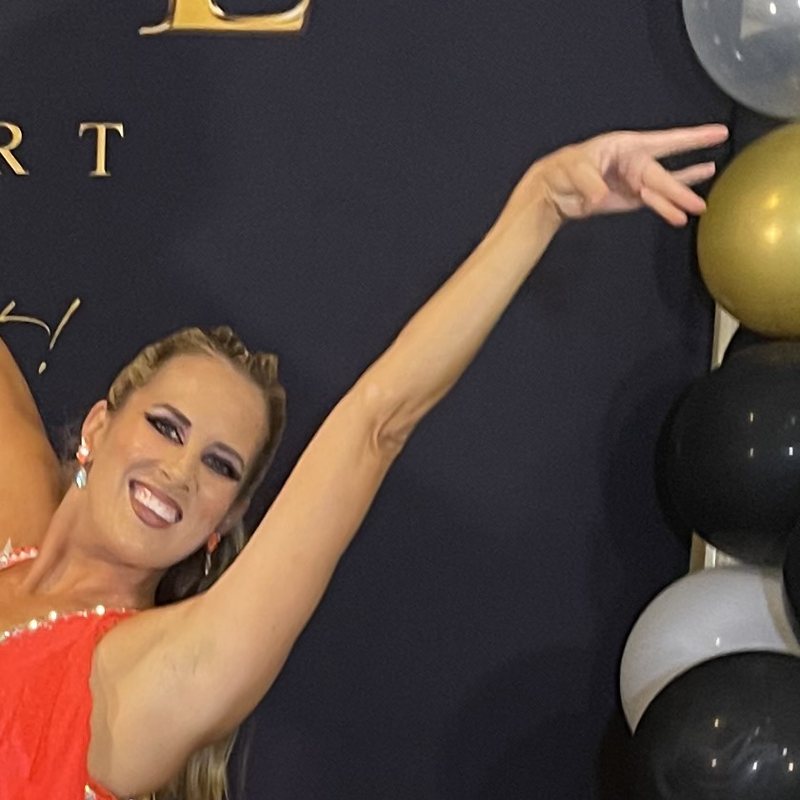
Amy teaches salsa, rumba and the other Latin dances privately. A lesson or two on a solid basic, a couple of turns and how to follow or lead them makes a crowded Latin night feel fun instead of fast. See private lessons.
Where to dance them
Burnsville · Every Saturday
Salsa Saturdays
Mediterranean Cruise Cafe (restaurant)
- Time: Lesson and live band from 10 PM to 1 AM
- Dances: Salsa to live bands
- Cost: $20 at the door (prepay discount on the website)
- Lesson: Lesson before the band
- Where: 12500 Nicollet Ave.
Minneapolis · Select Fridays (usually the 1st and 3rd)
Ritmo Tropical: Salsa, Bachata & Beer
La Doña Cervecería (brewery)
- Time: 9 PM–2 AM · lesson 9:30 PM
- Dances: Salsa, bachata and cumbia; live band and DJ
- Cost: $15 in advance
- Lesson: Beginner lesson
- Where: 241 Fremont Ave. N.
Minneapolis · Every Wednesday
Salsa & Bachata Wednesday
Conga Latin Bistro (restaurant)
- Time: 9 PM–midnight
- Dances: Salsa and bachata
- Cost: Free
- Where: 501 E. Hennepin Ave.
Columbia Heights · Select Sundays (check the calendar)
Bachata Night
Rail Werks Brewing Depot (brewery)
- Time: 7–10 PM
- Dances: Bachata, salsa, merengue and cumbia
- Cost: See the event calendar
- Lesson: No lesson
- Where: 4055 Central Ave. NE
Minneapolis · 2nd Saturday of the month
Malamanya Live: Second Saturday Salsa
Uptown VFW Post 246 (veterans hall)
- Time: Doors 8 PM · until 1:30 AM
- Dances: Salsa with a live Afro-Caribbean band, plus bachata, merengue and cumbia from the DJ (21+)
- Cost: $20 cash · $25 card
- Lesson: No lesson
- Where: 2916 Lyndale Ave. S.
Minneapolis · About once a month on Sundays (check the schedule)
Sunday Salsa Matinee
Icehouse (music venue), with Charanga Tropical
- Time: Band 5–7 PM · DJ 7–8 PM
- Dances: Salsa and cha-cha to a live charanga band
- Cost: $15
- Lesson: No lesson
- Where: 2528 Nicollet Ave.
East Coast, West Coast, Lindy Hop and blues
Swing & Blues
The Twin Cities swing scene is friendly to newcomers: big band nights usually start with a free beginner lesson, and the West Coast Swing clubs teach a lesson before every dance.
The dances
- East Coast Swing: the bouncy six-count swing for oldies, rockabilly and big band
- Lindy Hop: the original 1930s swing, energetic and playful
- West Coast Swing: smooth and stretchy, danced in a slot to pop, R&B and blues
- Blues: slow, close and grounded, danced to live blues
- Single-Time Swing: the simplest swing basic, and a great place to start
Want a head start? Try Amy's free Single-Time Swing video lesson before your first swing night.
Where to dance them
St. Paul · Every Thursday
Thursday Swing Night
Wabasha Street Caves (event venue)
- Time: Free lesson 6:15 PM · Band 7–10 PM
- Dances: East Coast Swing and Lindy Hop to live big bands
- Cost: $15 at the door · discounts for 65+ and under 21
- Lesson: Free beginner lesson
- Where: 215 Wabasha St. S.
St. Paul · 1st and 3rd Fridays
Twin City Rebels West Coast Swing Dance
Twin City Rebels (nonprofit dance club)
- Time: Lesson 8 PM · Dancing 8:30–11 PM
- Dances: West Coast Swing
- Cost: $10 members · $15 non-members
- Lesson: Lesson before the dance
- Where: Triune Masonic Temple, 1898 Iglehart Ave.
Roseville · 2nd and 4th Fridays
Minnesota West Coast Swing Dance Club Friday Dance
Minnesota West Coast Swing Dance Club
- Time: Evening lesson, then open dancing; see the club calendar
- Dances: West Coast Swing
- Cost: See the club calendar
- Lesson: Lesson included with admission
- Where: B-Dale Club, 2100 Dale St. N.
St. Paul · Every Tuesday
Tuesday Blues Jam & Dance
Wilebski's Blues Saloon (bar)
- Time: 7–11 PM
- Dances: Blues dancing and slow swing to a live jam
- Cost: Free, no cover
- Lesson: No lesson
- Where: 1638 Rice St.
Milongas and prácticas
Argentine Tango
A milonga is a tango social dance. A práctica is a more relaxed practice session where it is normal to stop, talk and try a step again. Prácticas are the easiest place to start.
The dances
- Tango: the slow, close embrace most people picture
- Vals: tango danced to waltz-time music
- Milonga (the dance): a quicker, playful rhythm played in sets during the night
Amy teaches Argentine tango, too. If you want a comfortable embrace and a few clean steps before your first milonga, email Amy.
Where to dance them
Minneapolis · 4th Sunday
Tango at Tapestry
Tapestry Folkdance Center (nonprofit)
- Time: 6–9:30 PM
- Dances: Argentine tango
- Cost: $20 · member, age 18–30 and youth discounts
- Where: 3748 Minnehaha Ave.
Minneapolis · Every Saturday
Saturday Práctica
Tango Society of Minnesota (volunteer nonprofit)
- Time: 11 AM–1 PM
- Dances: Argentine tango practice
- Cost: See the society's calendar
- Lesson: Open practice, no lesson
- Where: Center for Performing Arts, 3754 Pleasant Ave. S. (enter on 38th St.)
Two-step, country waltz, line dances
Country & Line Dancing
Country nights mix partner dances and line dances, so you can join in with or without a partner. Partner dances travel counterclockwise around the floor; line dancers stay in the middle.
The dances
- Two-step: the classic country partner dance: quick, quick, slow, slow
- Country waltz: a smooth, traveling waltz in boots
- Country swing: East Coast Swing moves to country songs
- Line dancing: set routines danced together, no partner needed
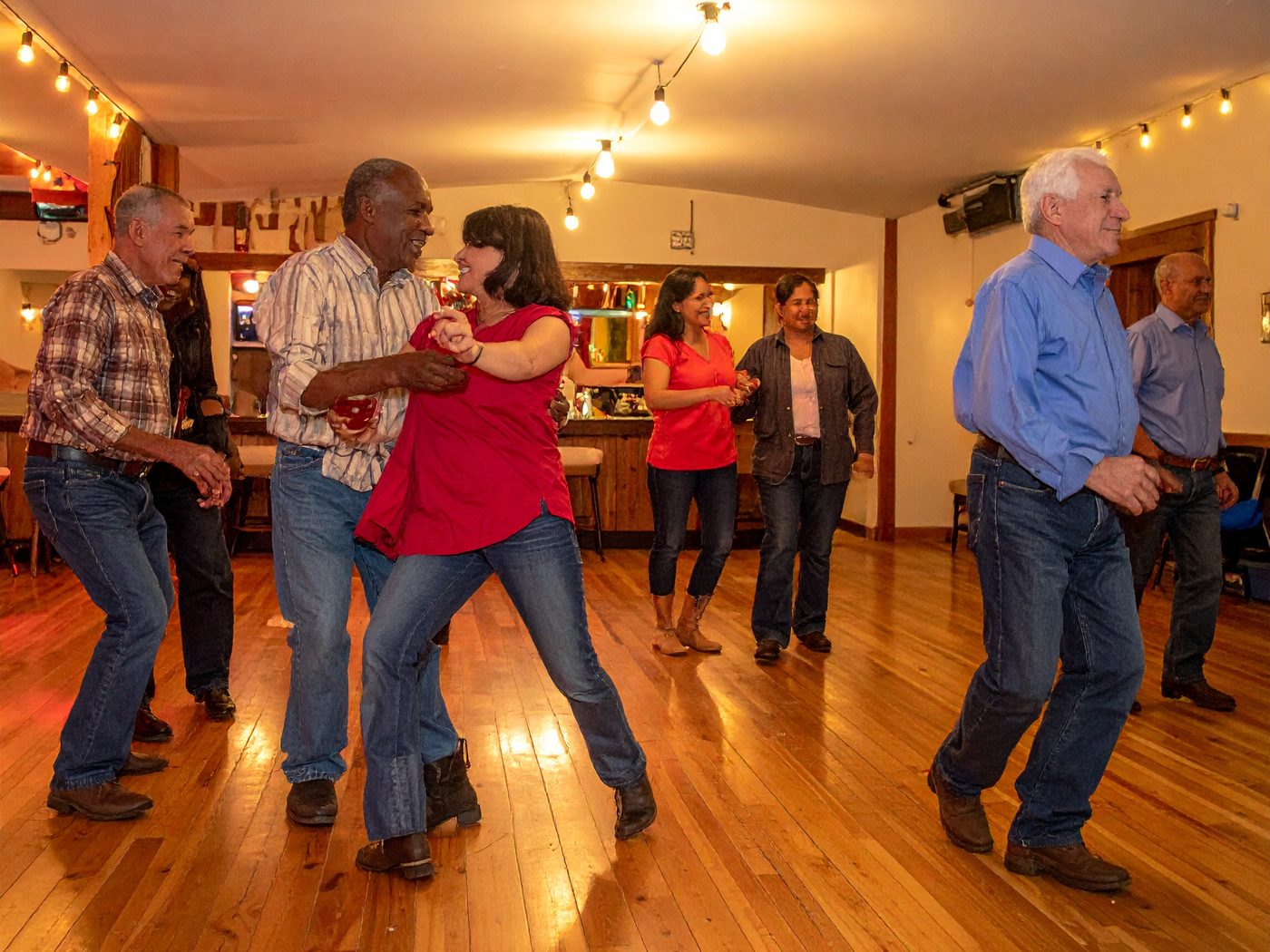
Illustration: a country dance night (fictional dancers).
Where to dance them
Minneapolis · Every Sunday
Sunday Country Dance
Twin Cities Country Dancers (volunteer club for LGBTQ+ dancers and friends)
- Time: Lessons 6:30 and 7 PM · Open dancing 7:30–10 PM
- Dances: Two-step, line dances, country waltz, East and West Coast Swing, polka
- Cost: $8
- Lesson: Lessons on rotating topics
- Where: Eagles Club #34, 2507 E. 25th St.
Minneapolis · 1st Saturday of the month
Monthly Stampede
Twin Cities Country Dancers (volunteer club)
- Time: Lesson 9 PM · Dancing 9:30 PM–1 AM
- Dances: Two-step and line dances
- Cost: See the club calendar
- Lesson: Lesson before the dance
- Where: Eagle Bar, 515 Washington Ave. S.
St. Paul · Every Wednesday
Wednesday Line Dancing
Wilebski's Blues Saloon (bar)
- Time: Lesson 7–8 PM · Dancing until 11:30 PM
- Dances: Line dancing
- Cost: $5
- Lesson: Lesson before the dance
- Where: 1638 Rice St.
Plymouth · Wednesdays (all levels) · Tuesdays and Thursdays (intermediate and advanced)
Line Dance Drop-In Nights
West Medicine Lake Community Club (nonprofit community club)
- Time: Wed 6:30–9:30 PM · Tue and Thu 7–10 PM
- Dances: Line dancing on a 2,500-square-foot floor
- Cost: $8 members · $10 non-members
- Lesson: Taught level by level, with open dancing between
- Where: 1705 Forestview Ln. N.
A Minnesota hall tradition
Polka & Old-Time
Polka and old-time dances fill halls all over Minnesota, usually on Sunday afternoons with a live band. Read more about the tradition in our polka and Oktoberfest guide.
The dances
- Polka: quick, bouncy and turning, and pure fun to a live band
- Old-time waltz: the friendly, everyday waltz of Minnesota dance halls
- Schottische: a light, easy step-hop dance you will hear between polkas
Where to dance them
Columbia Heights · About once a month, mostly Sunday afternoons
Midwest Polka Association Dance
Midwest Polka Association (club)
- Time: Sundays usually 1–5 PM; see the schedule
- Dances: Polka, old-time waltz and more to live bands
- Cost: See the schedule
- Lesson: No lesson
- Where: John P. Murzyn Hall, 530 Mill St. NE
Live Farther Out?
We define the metro generously, from St. Michael to Chaska to Lino Lakes. Right now the outer-suburb nights we could confirm are in Plymouth (line dancing), Burnsville (salsa), Lakeville (big band) and Columbia Heights (polka and bachata).
This list keeps looking. New nights are added as soon as their own host confirms them, and nights that end come off on their own. Know a regular night near you? Email Amy and we will check it.
Your First Night Out: What to Expect
- Arrive for the lesson. Most nights start with a 30- to 60-minute group lesson that warms everyone up and mixes partners.
- Come with or without a partner. Asking someone new to dance is normal at a social. So is a friendly “no, thank you.”
- Know the floor. Smooth dances travel counterclockwise around the edge; swing, salsa and rumba stay near the middle.
- Wear shoes that turn. Suede or smooth leather soles slide; rubber sneakers grip and make turns hard on your knees.
- Keep it short and kind. One or two songs per partner is typical. Say thank you, and dance with someone new next.
Going alone? Read going to your first ballroom social alone. Worried about bumping into people? Here is how to navigate a crowded dance floor, and what to do when you dance with experienced dancers.
Get ready with Amy
Walk In Feeling Ready
A private lesson before your first social night makes a big difference. You work on the dances you will actually hear, how to lead or follow a few easy patterns, and the floor manners nobody tells you about.
Amy Hanson is the three-time defending Dancer's Cup Tour Top Teacher. She has danced professionally and internationally and built friendships with dancers many people recognize from Dancing with the Stars. People who think they are not coordinated are exactly the beginners she loves to teach, and experienced dancers keep progressing with her, too. No partner needed. Based in the Twin Cities, Amy teaches in Saint Paul, Roseville, Shoreview and Plymouth and welcomes dancers from across the metro.
Amy typically replies within one business day. Not sure which lesson fits? Try the Find Your Lesson guide.
Frequently Asked Questions
Do I need a partner to go social dancing?
No. Several of these nights say so outright, group lessons usually rotate partners, and line dancing needs no partner at all.
I have only had a few lessons. Am I ready?
Yes, if you know a basic step and one or two patterns. Start at a night with a lesson first, like a ballroom variety dance or a big band swing night, and dance the songs you recognize.
What is the difference between a milonga and a práctica?
Both are Argentine tango events. A milonga is a social dance with its own etiquette; a práctica is a relaxed practice session where stopping to work on a step is welcome.
How much do these nights cost?
Most cost $5 to $20 at the door, a few are free, and some offer member, student or senior discounts. Each listing shows the price its host publishes.
Are these Ballroom by Amy events?
No. They are public nights run by nonprofit clubs, community groups and venues. When Amy teaches a lesson at one, we note it on the listing.
How current is this list?
Every listing links to its host’s own schedule, and each one is checked automatically every week. Nights that end come off the page on their own, but plans change, so confirm before you go.
See You on the Dance Floor
Tell Amy which dances you want to use and when you hope to go out. She will help you get there.
Keep reading
- Group Dance Classes & Formation Teams
- Free Ballroom Dance Lessons
- Practice Ballroom at Home in a Small Space
Listings are public events run by clubs, community groups and venues, not by Ballroom by Amy. Times and prices come from each host’s own page; plans change, so confirm before you go.
Listings are checked automatically every week. Last check: October 21, 2026.
AI assisted with some images on this page: the two dance-night scenes are illustrations of fictional people. The photo of Amy is real.